Our Approach to Music
Why this place exists.
Music is treated here as something that belongs in people’s lives.
Not as an activity you grow out of, or something you wait to return to when there’s more time. Not as a phase, or a credential, or a reward for progress elsewhere.
People arrive with different histories — some with years of experience, some with long gaps, some with a sense that music quietly slipped away at some point. That’s all normal here.
Music doesn’t need to justify its place. It doesn’t need to lead anywhere specific. It’s allowed to exist alongside work, family, uncertainty, and change.
This is a place built on the assumption that music can stay with people — not as an ambition, but as a practice.
People don’t arrive here to get ready for music.
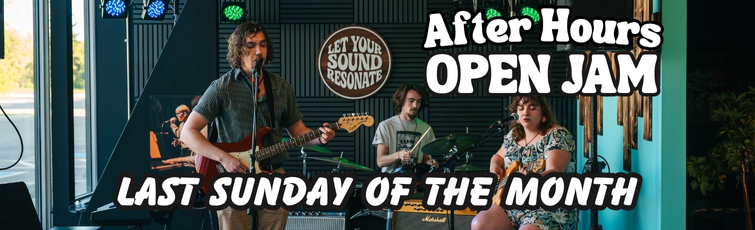
They arrive and participate — at whatever level they’re at, with whatever they’re carrying. Playing, practicing, listening, recording, trying things with other people. Not later. Not after approval. Right away.
There isn’t a moment where someone becomes “allowed” to make music here. There isn’t a threshold to cross or a version of yourself you need to reach first.
Learning happens through involvement. Through doing the thing itself, imperfectly and repeatedly, over time.
This place is built around that assumption.
There isn’t an ideal pace here.
Some people move quickly for a while and then slow down. Some return after time away. Some stay steady for years. Progress isn’t measured by intensity, but by return.
Music develops through regular engagement over time. It doesn’t require urgency to take shape, and it isn’t undone by pauses.
This place is built to accommodate that reality — allowing people to stay connected to music as the rest of life changes around it.
Time passes either way. Here, it’s allowed to accumulate into something durable.
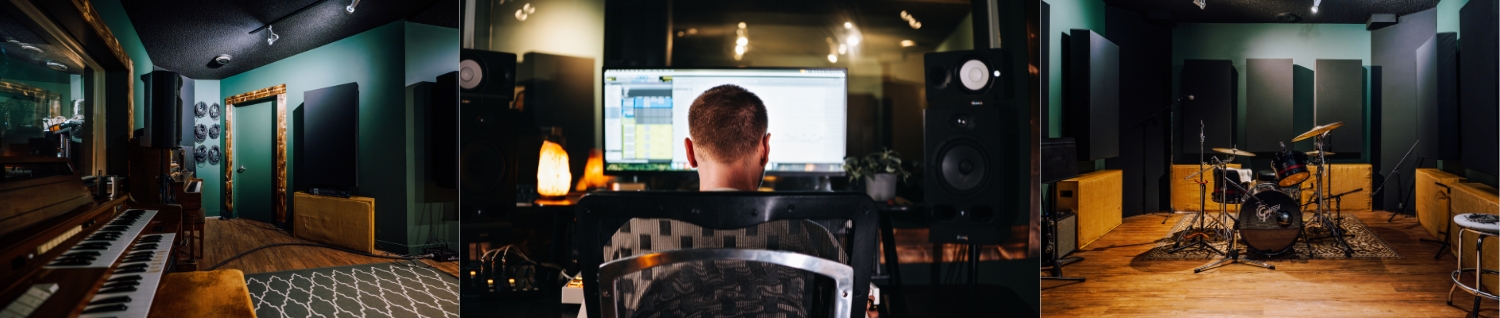
The environment here is intentional.
Space, sound, and attention are treated as things worth protecting. Not to impress, but to remove unnecessary friction from the act of making music.
People aren’t asked to be brave before they begin. The expectation is simply that the conditions are steady enough that trying feels normal.
When the environment is supportive, confidence doesn’t need to be summoned. It develops as a byproduct of repeated participation, without being called out or demanded.
Music here doesn’t need to become anything else.
It doesn’t need to turn into a career, a performance schedule, or a measurable outcome to be taken seriously. Those paths are possible, but they’re never required.
What matters is that people build the capacity to keep making music — to participate, to return, to collaborate, and to stay connected over time.
The goal isn’t a specific destination. It’s that music remains available as part of someone’s life, rather than something they leave behind.
This place exists so that music has somewhere to continue happening.
Not as an event or a moment, but as an ongoing presence — something people can return to as their lives change.
As attention becomes more fragmented and more mediated, shared spaces for making and experiencing music matter in a different way. Not louder. Just more deliberately.
Resonate is held open with that in mind.
This is a place where music is allowed to keep unfolding.
There’s no requirement to decide what it becomes, only to stay engaged with the act of making it.
If that feels familiar, you’ll likely feel at home here.