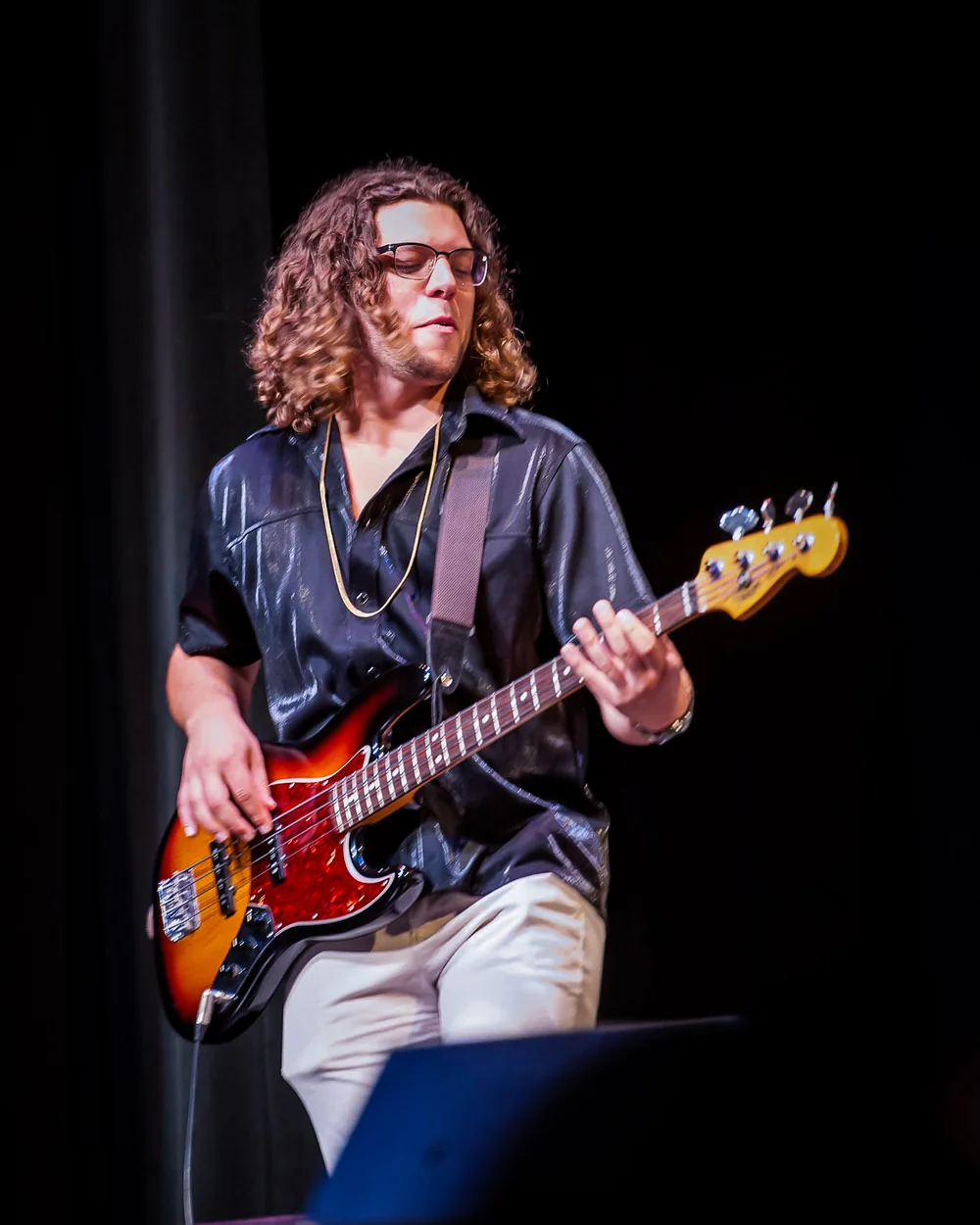
Bassist playing a semi-hollow electric bass during a performance at Resonate in Edmonton

Bass Lessons

Bass lives in the pocket.

Pocket is a bass player's word for the rhythmic feel where bass and drums lock together and the rest of the band sits on top. People feel it before they think about it, and most of what makes a song land is the pocket holding.

Bass is the thing you notice most in its absence.

Take bass out of a song and what's left feels thinner. Less weight, less space, less of the low frequency that travels through floors and into the chest. Bass works on the listener's body before the mind catches up. Most people don't notice how much it's doing until it isn't there, and most musicians don't realize how much there is to it until they start playing it themselves.

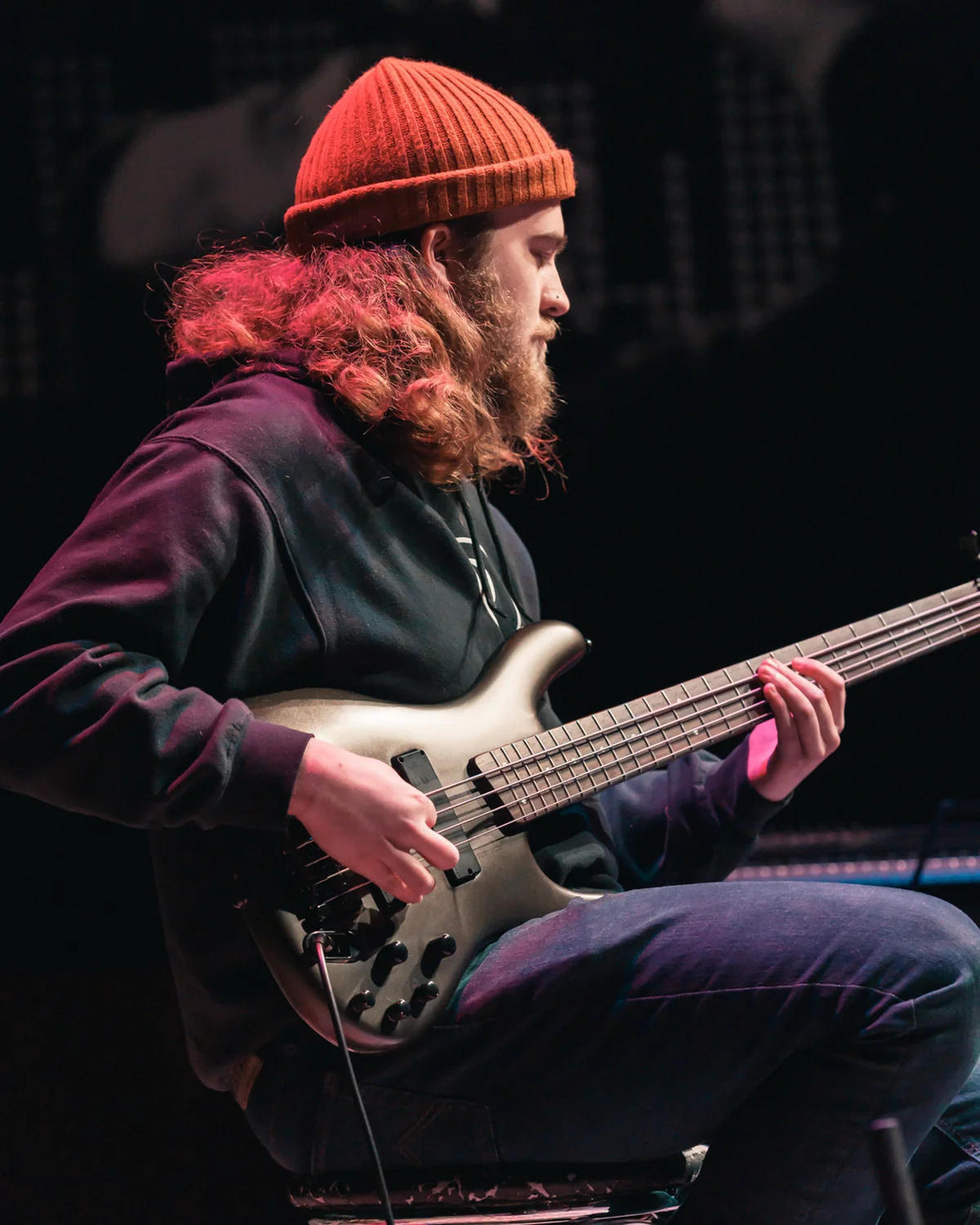
Bassist playing a six-string bass during a performance at Resonate in Edmonton

How bass learning tends to unfold here

Most of what makes a bass line lock in happens in the time, the touch, and the choice of what to leave out.

01

Right hand and left hand, the foundation everything else sits on

The right hand is where the bass actually meets the song. Fingerstyle, pick, slap, palm muting. Each has its own touch and timing, and switching between them changes what the song feels like. We spend real time on these because they're not just preparation for the music. They are the music.

02

Time and feel as the actual subject matter

Most of what bass lessons work on is when notes happen, not what notes are played. Sitting just behind the beat, just in front, or right in the middle. We work with metronome first, then recordings, then the drummers students eventually play with. That's where pocket actually lives.

03

Hearing the bass changes how you hear everything

Once you start playing bass, you stop hearing songs the way you used to. The bass line is suddenly the most interesting part of every record you already know. Lessons spend real time on those records, hearing what the bass is doing and how it shapes the song. The songs students bring in are the curriculum.

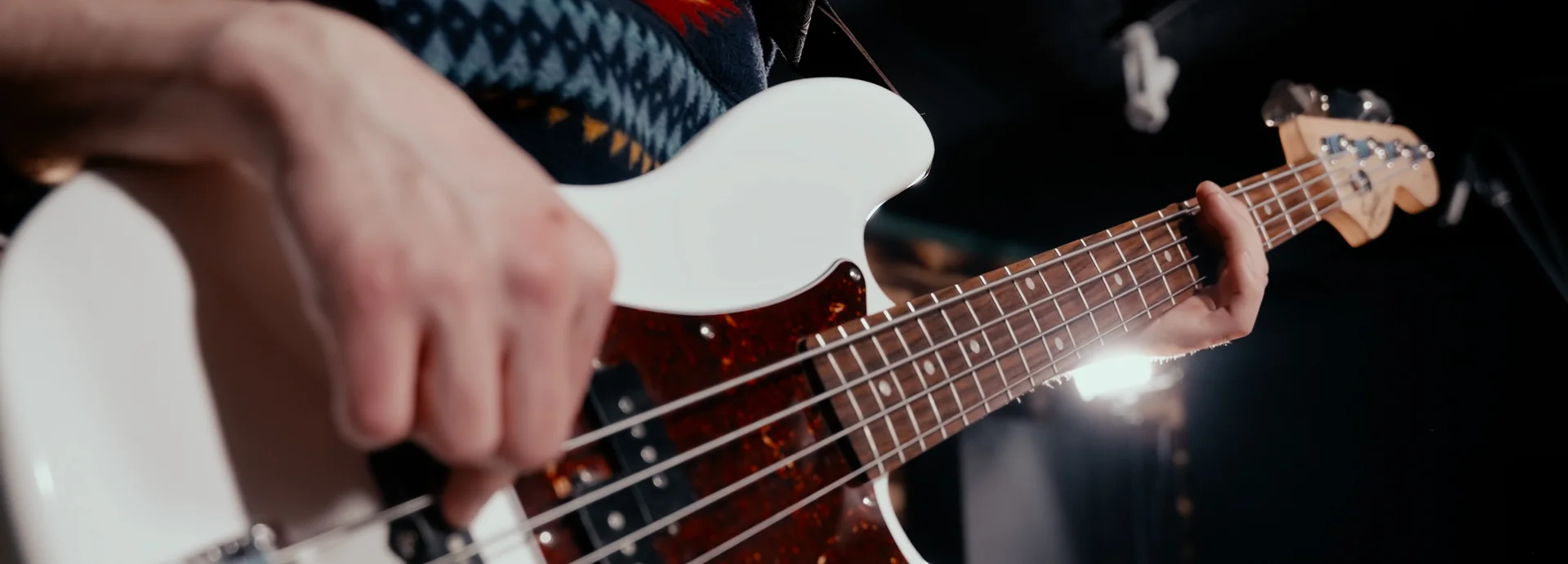
Bass student seated on a stool playing a teal short-scale bass on the Resonate stage in Edmonton

A good fit often looks like this.

Bass tends to fit people who like making music with other people more than they like being the focal point. Bandmates, jam sessions, the rhythm section. It's also the instrument musicians come to when they want to round out how they hear and play.

That might mean a beginner who already wants to be in a band, a guitarist or pianist looking to add bass as a second instrument, a returning player who hasn't picked it up in a decade, or someone who's been playing along to records at home and wants to find out what's actually under their fingers. Bands are usually looking for bass players, and a bassist who can hold a pocket tends to stay busy. The path opens up differently for each, but the core work is the same: feel, listening, time.

Practical lesson options

Private bass lessons are available through weekly membership or as drop-ins.

30 minute private lesson

Often a strong fit for younger beginners, or for people who want a consistent weekly starting point.

60 minute private lesson

A better fit for older students, adults, returning players, or anyone who benefits from more room to settle in and work through ideas.

Weekly membership

The primary lesson structure at Resonate. It includes a reserved weekly lesson time, make-up lesson flexibility, and one complimentary recording studio hour every three months.

Drop-ins

A flexible option for students who do not want a fixed weekly time. These are single lessons booked individually based on teacher and schedule availability.

Pricing snapshot

01
30 minute lesson – drop-in
$40
02
30 minute lesson – weekly membership Lessons on Mondays are $135/mo to account for long weekends
$145/mo
03
60 minute lesson – drop-in
$75
04
60 minute lesson – weekly membership Lessons on Mondays are $265/mo to account for long weekends
$285/mo

Weekly membership includes make-up flexibility with at least one week's notice and one complimentary recording studio hour every three months.

Lessons here are shaped by real teachers.

Six bass teachers work at Resonate. They each came to bass through a different door: band life, studio sessions, jazz, a switch from another instrument. That breadth matters because bass means different things in different musical contexts, and the right teacher tends to be the one whose musical world overlaps with the student's.

In a one-to-one lesson, what the teacher knows shapes what the student gets. A bass teacher who has spent a decade in working bands knows different things than one who has spent it in the studio, and both know things a method book cannot tell you. The lesson room is the place those different ways of knowing actually come through.

Click a portrait to hear more about how they teach.

Starting is simple

Tell us a little about who lessons are for and what you have in mind.
You do not need everything figured out first.

Start Here