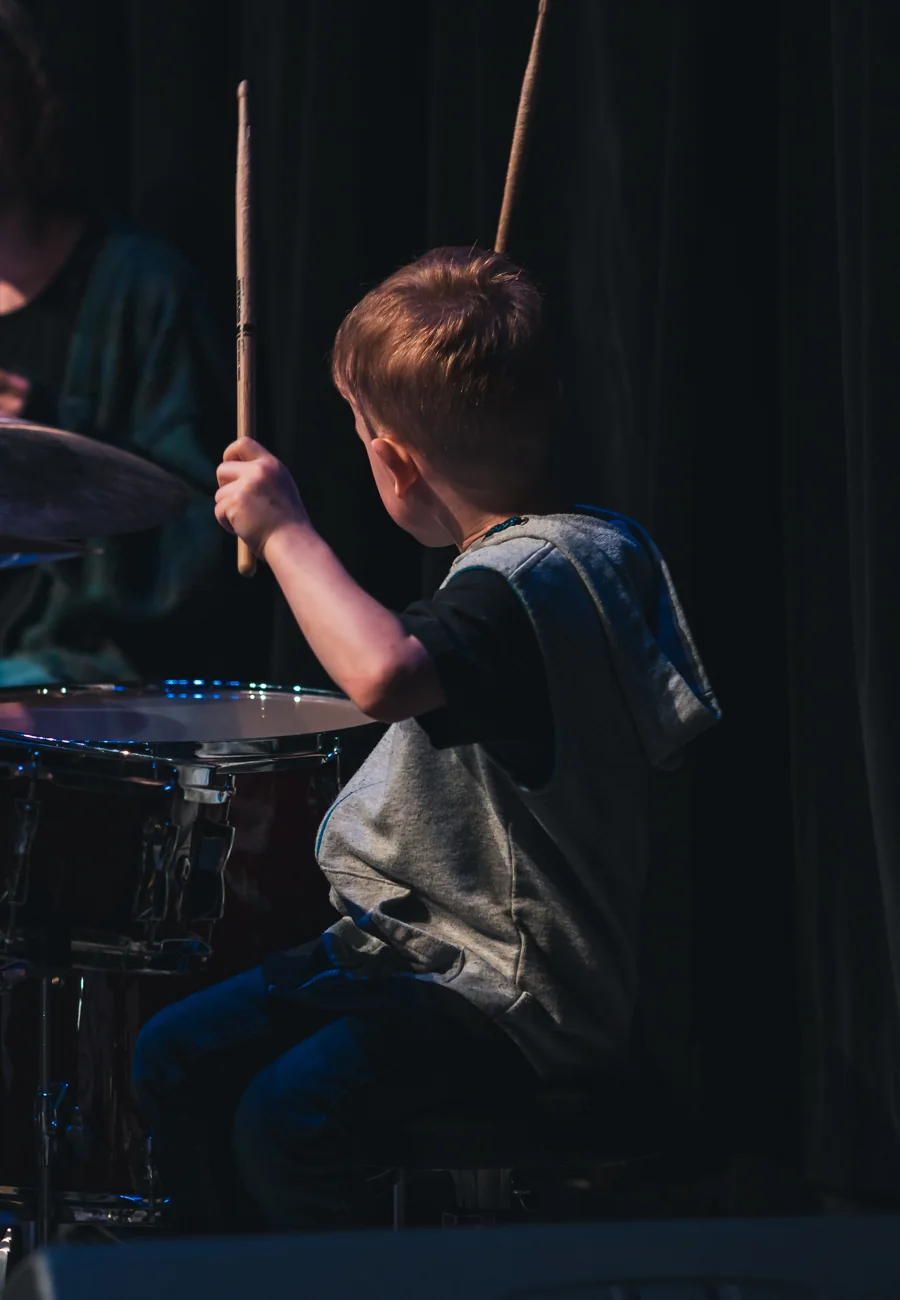
Young drummer performing at a recital with another drummer at Resonate in Edmonton

Drums Lessons

Drums are how music moves.

Time, feel, and the shape of a song all come from the kit. For some, drums become the primary instrument they build everything else around. For others, it is how they end up playing with other people.

Drums are felt before they are heard.

Rhythm starts in the body before it becomes sound. Arms and legs move independently, the kick carries through the floor, and attention holds all of it in time. Drums develop coordination, listening, and a physical sense of how music keeps together.

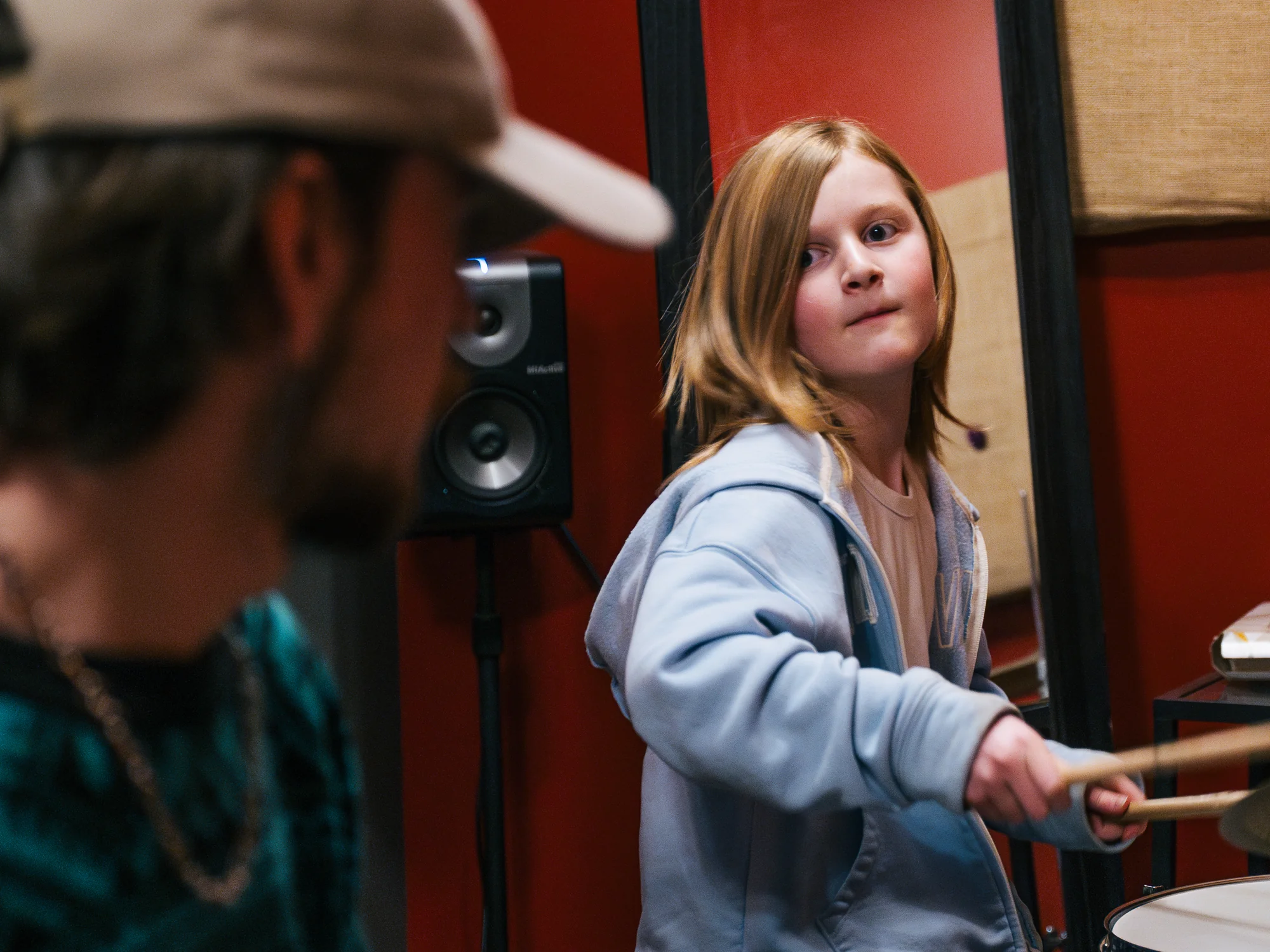
Drum student at the kit with her teacher during a lesson at Resonate in Edmonton

How drum learning tends to unfold here

Drum coordination is largely physical. It tends to settle into the body before it becomes visible in technique.

01

Start with what the body already does

Most drum students arrive already tapping, air-drumming, or moving to songs they love. The body is already finding the beat. Lessons work better when that is the starting point, not something to replace with clean exercises before real drumming begins.

02

Let the feel stay in the room

It is easy for drum practice to drift into pure mechanics. Rudiments, metronome work, and repetition all matter, but they work better when the feel of real music is staying in the room alongside them. Good lessons move between technical detail and the actual groove.

03

Drums live with other musicians

Drums are the most band-dependent instrument in the building. Drum students tend to find themselves playing with other people sooner than most, from sessions with other students to rehearsals to the monthly After Hours Jam. That is not a later stage of learning drums. It is part of learning drums.

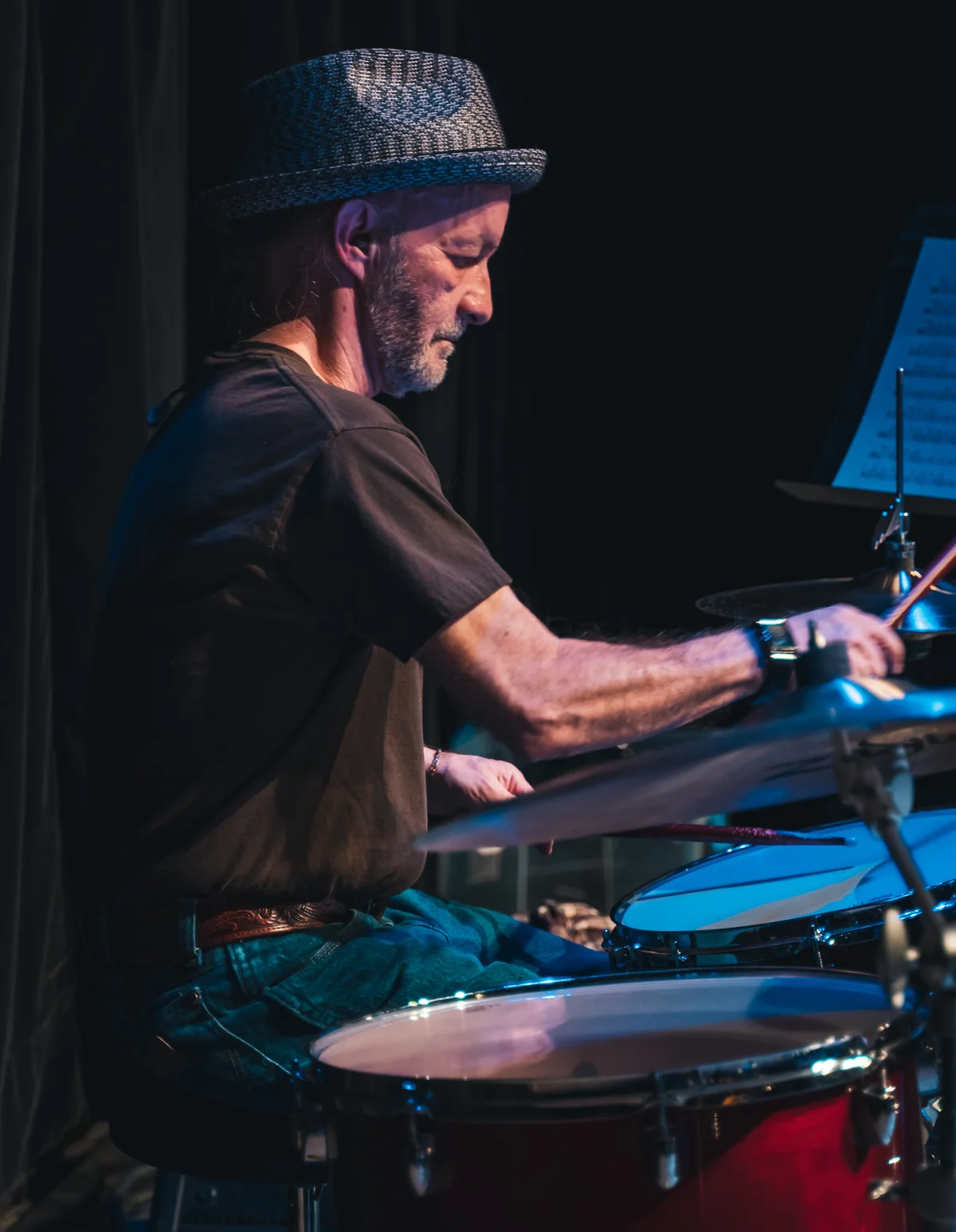
Seasoned drummer performing on stage at Resonate in Edmonton

A good fit often looks like this.

Drums tend to work well for people who already feel rhythm physically. You do not need to have played before. That might mean a kid who is always tapping on things, an adult starting fresh or returning, or someone who already plays another instrument and wants rhythm-section fluency.

People drawn to music production are also a stronger fit than most expect. Rhythm, groove, and timing are foundational to how produced music is built and heard, and having those as physical knowledge rather than just conceptual tends to change the way someone works in a DAW.

Practical lesson options

Private drum lessons are available through weekly membership or as drop-ins.

30 minute private lesson

Often a strong fit for younger beginners, or for people who want a consistent weekly starting point.

60 minute private lesson

A better fit for older students, adults, returning players, or anyone who benefits from more room to settle in and work through ideas.

Weekly membership

The primary lesson structure at Resonate. It includes a reserved weekly lesson time, make-up lesson flexibility, and one complimentary recording studio hour every three months.

Drop-ins

A flexible option for students who do not want a fixed weekly time. These are single lessons booked individually based on teacher and schedule availability.

Pricing snapshot

01
30 minute lesson – drop-in
$40
02
30 minute lesson – weekly membership Lessons on Mondays are $135/mo to account for long weekends
$145/mo
03
60 minute lesson – drop-in
$75
04
60 minute lesson – weekly membership Lessons on Mondays are $265/mo to account for long weekends
$285/mo

Weekly membership includes make-up flexibility with at least one week's notice and one complimentary recording studio hour every three months. Lesson rooms have full drum kits, so you do not need to own one to start.

Lessons here are taught by a gigging drummer.

Tristen Tiefenbach is the drum teacher at Resonate. He plays drums in two active Edmonton bands, Monks On Call and Gratuitous, and writes, records, and gigs with both. Monks On Call's most recent album was recorded at the Resonate studio. His drumming has put him on stages across Canada, including opening for Calpurnia at MacEwan Hall and a first-place set at the Starlite Room Battle of the Bands. He also does clinic work with middle-school and youth summer programs.

Students who come in for drums find a teacher who treats trying as the work itself. Tristen was terrified of teaching at first, until years of gigging with different players showed him that you don't need the perfect words to help someone find what they're working on. The thing he says he passes on most often is that nothing is perfect and never will be. Perfection is the inspiration, not the aspiration.

Click the portrait to hear more about how Tristen teaches.

Starting is simple

Tell us a little about who lessons are for and what you have in mind.
You do not need everything figured out first.

Start Here