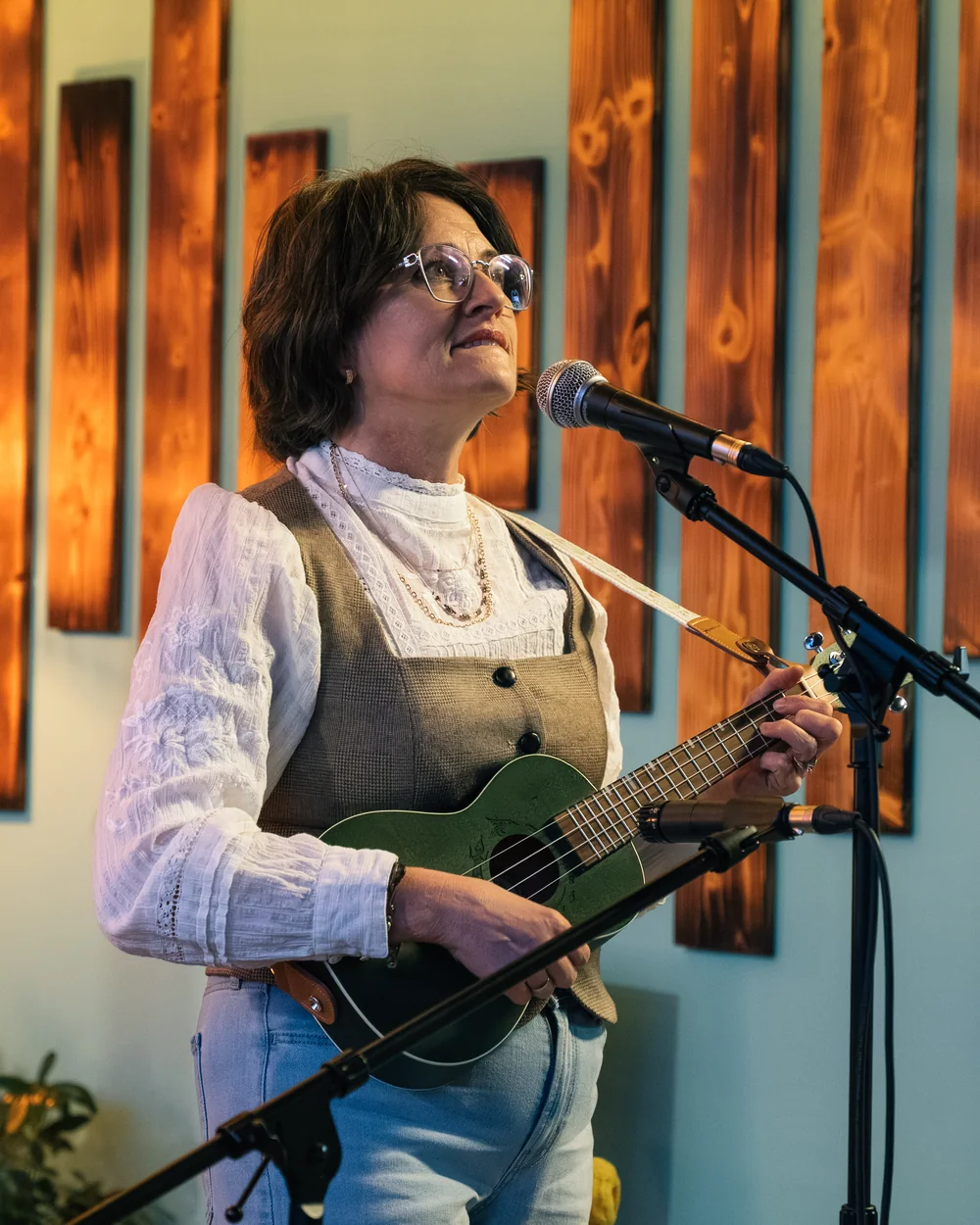
An adult ukulele player singing into a microphone in the Resonate space in Edmonton

Ukulele Lessons

Quick to start. Hard to put down.

Four strings, a small body, a first chord that lands in the first lesson. The ukulele tends to sit close to whoever picks it up. Easy to begin with, and quietly hard to set aside once you've started.

The ukulele is a good-natured instrument.

There's a low barrier between picking it up and playing something on it. The chord shapes are simple enough that a beginner can move through a song in their first few lessons. The instrument is small enough to carry and quiet enough to play without negotiating with the rest of the house. Most people who start playing it end up playing it more than they planned to.

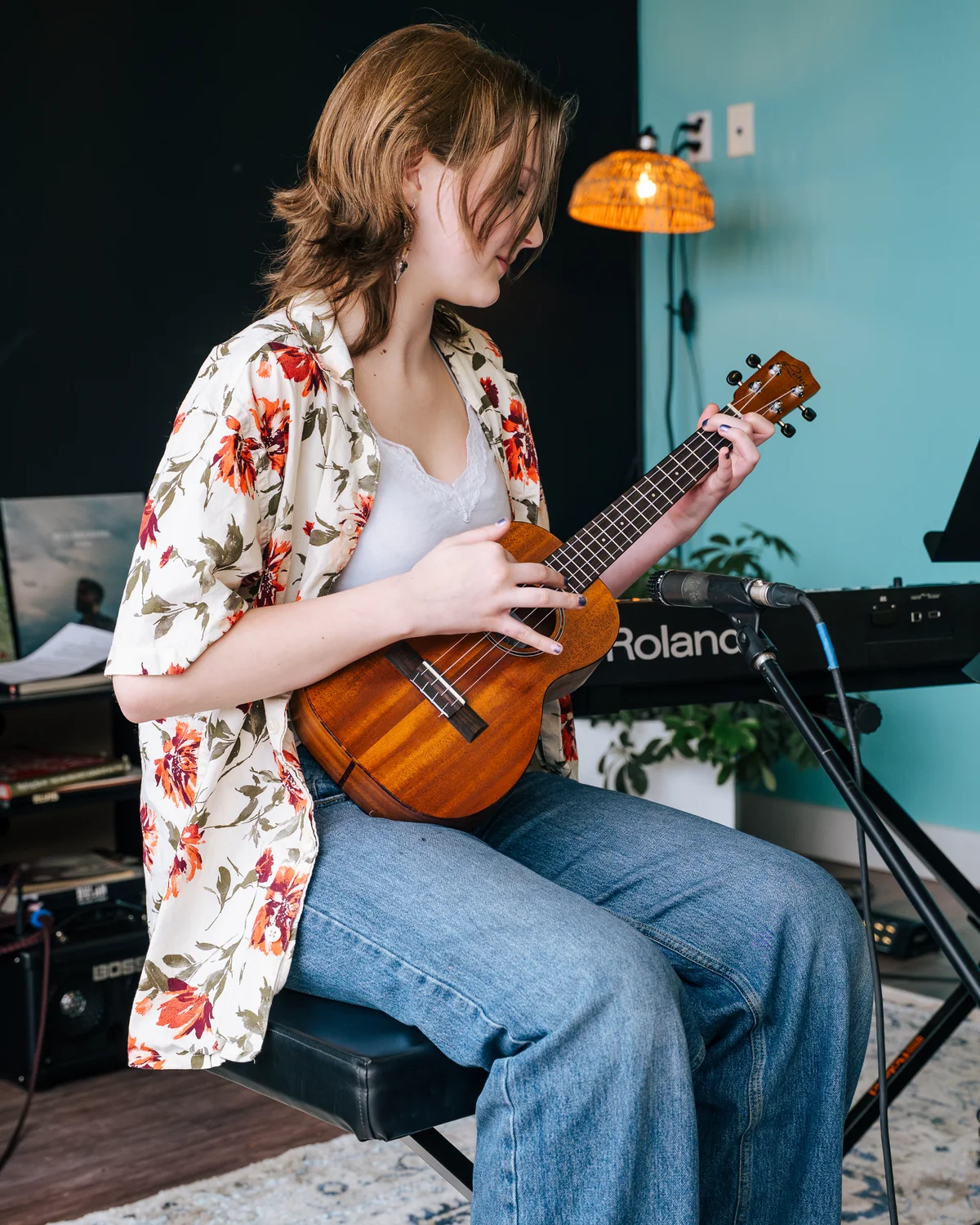
Ukulele student playing in a teaching room at Resonate Music School in Edmonton

How ukulele learning tends to unfold here

Most of the early ground gets covered quickly. Lessons tend to open up from there.

01

First chords come quickly

Four strings, simple chord shapes, and a small fretboard mean that the basic vocabulary of the instrument lands fast. A new player can usually strum through a song by the end of the first lesson or two. That early "I'm playing music" feeling shows up almost right away, and lessons build on it from there.

02

Singing tends to come along for the ride

The ukulele is small enough that it doesn't compete with a voice. Once a student can hold a few chord shapes, singing through a verse becomes a natural next step. We don't push it, but we don't ignore it either. Most students who play ukulele end up singing while they play, even if they didn't plan to.

03

It goes where the player goes

The ukulele is small enough to take to a porch, a campfire, a friend's house, or a couch on a Sunday morning. Lessons account for that. We work on songs students actually want to play with people, on the instrument they actually have with them. The point is that the playing keeps going outside the lesson.

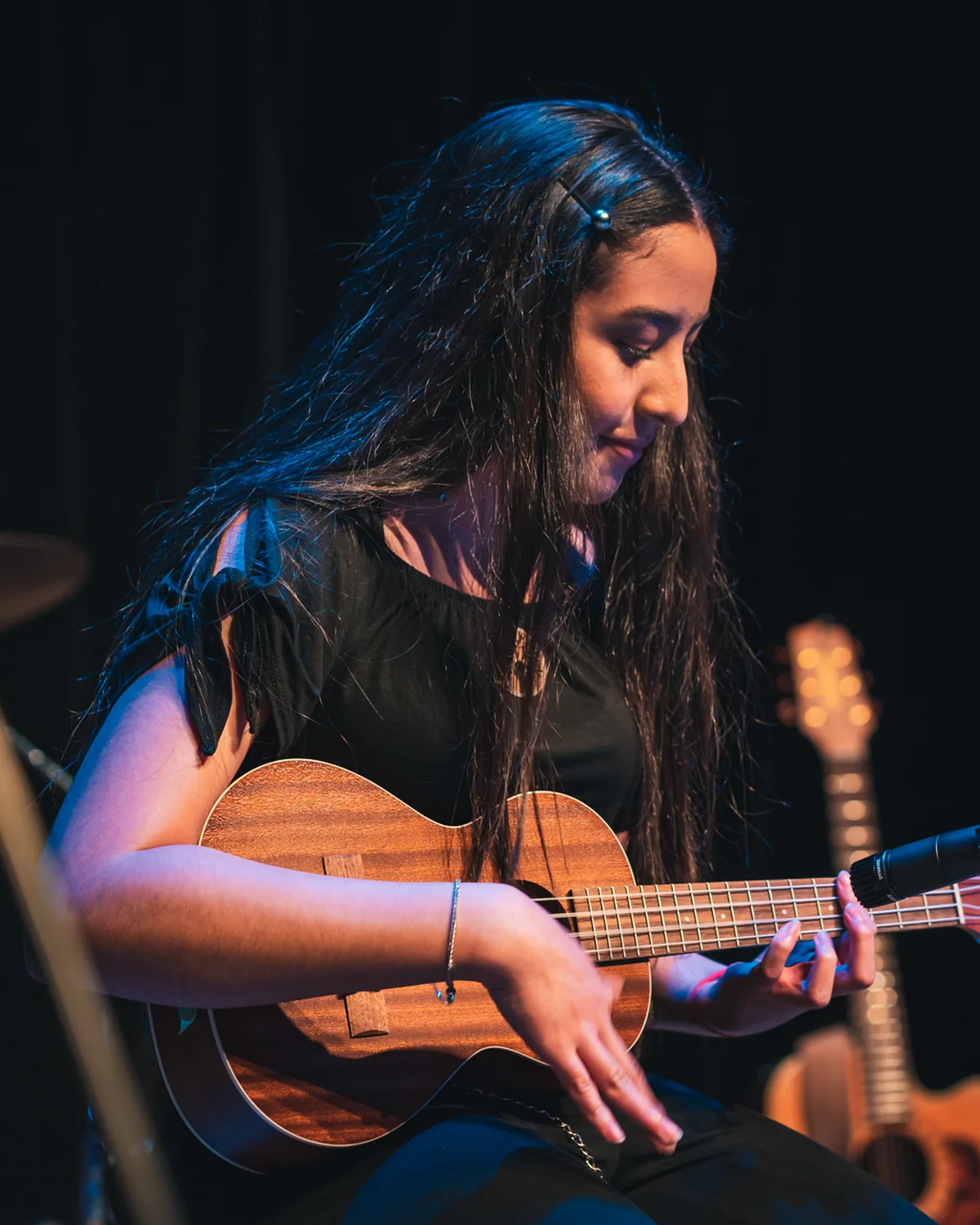
Young ukulele player performing on stage at a Resonate recital in Edmonton

A good fit often looks like this.

The ukulele tends to fit people who want to be making music sooner rather than later. Kids picking up their first instrument. Adults who've always meant to try something musical. Players of other instruments who want a smaller, lighter companion that travels with them.

It's also a common pick for people who want to sing without being the only thing in the room making sound. The chord shapes are reachable inside a few lessons, and the rest of what makes a ukulele lesson worth showing up for unfolds from there. The path opens up differently for each person, but the early ground is the same: a few shapes, a few strums, a song to play through.

Practical lesson options

Private ukulele lessons are available through weekly membership or as drop-ins.

30 minute private lesson

Often a strong fit for younger beginners, or for people who want a consistent weekly starting point.

60 minute private lesson

A better fit for older students, adults, returning players, or anyone who benefits from more room to settle in and work through ideas.

Weekly membership

The primary lesson structure at Resonate. It includes a reserved weekly lesson time, make-up lesson flexibility, and one complimentary recording studio hour every three months.

Drop-ins

A flexible option for students who do not want a fixed weekly time. These are single lessons booked individually based on teacher and schedule availability.

Pricing snapshot

01
30 minute lesson – drop-in
$40
02
30 minute lesson – weekly membership Lessons on Mondays are $135/mo to account for long weekends
$145/mo
03
60 minute lesson – drop-in
$75
04
60 minute lesson – weekly membership Lessons on Mondays are $265/mo to account for long weekends
$285/mo

Weekly membership includes make-up flexibility with at least one week's notice and one complimentary recording studio hour every three months.

Lessons here are shaped by real teachers.

Seven teachers at Resonate teach ukulele. Most of them came to it as a second or third instrument: guitarists, vocalists, and pianists who picked up the ukulele somewhere along the way and now teach it alongside what they came in for. That's actually closer to how most people end up playing ukulele themselves. As a companion to other ways they make music.

In a one-to-one lesson, the teacher's musical background shapes how the work feels. A teacher whose main instrument is voice tends to weave singing in earlier. A teacher whose main instrument is guitar tends to point out the fretboard parallels. The student gets to pick whose room they sit in, and that choice changes the experience.

Click a portrait to hear more about how they teach.

Starting is simple

Tell us a little about who lessons are for and what you have in mind.
You do not need everything figured out first.

Start Here