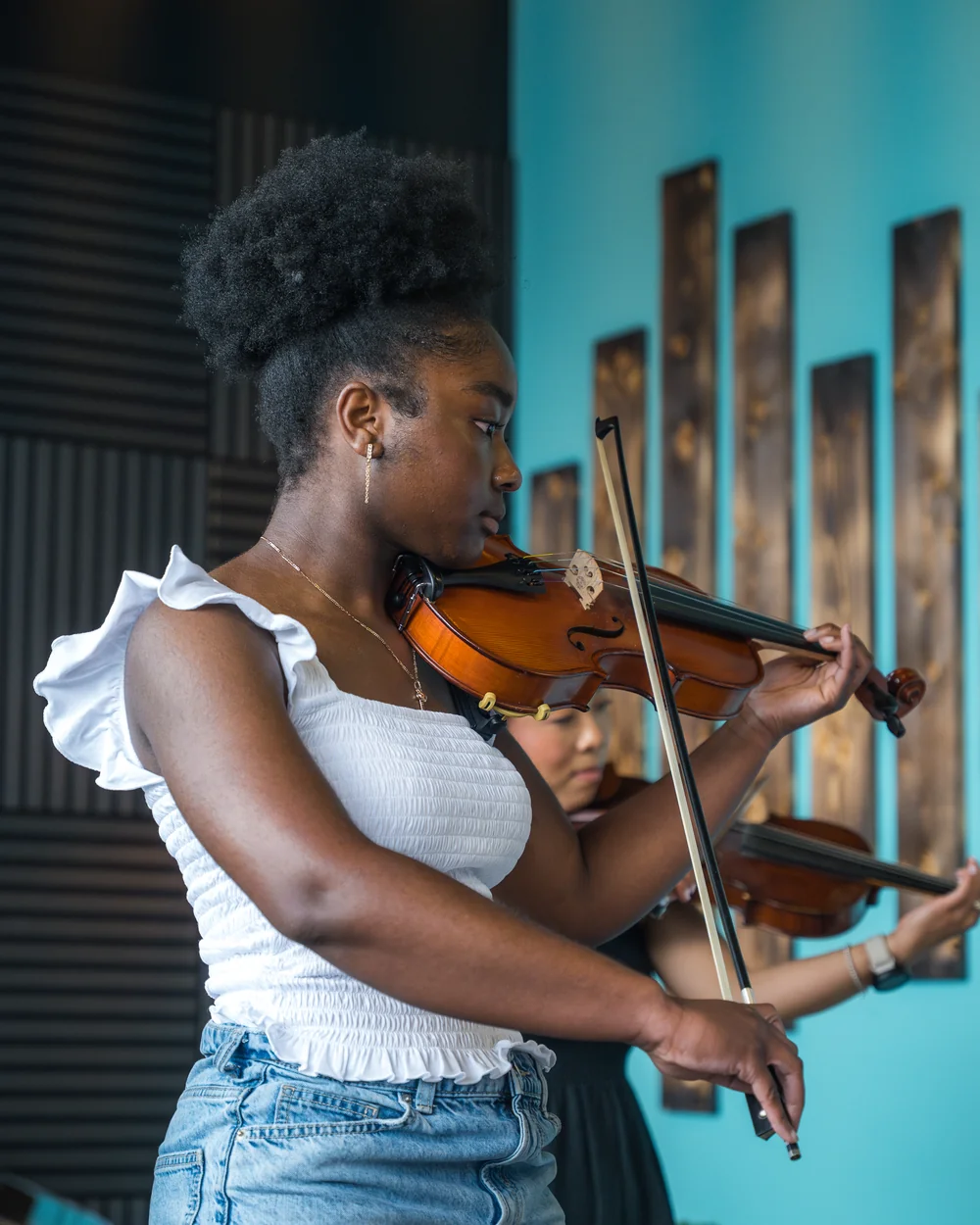
Violinists playing together at Resonate music school in Edmonton

Violin & Fiddle Lessons

The violin gives nothing away.

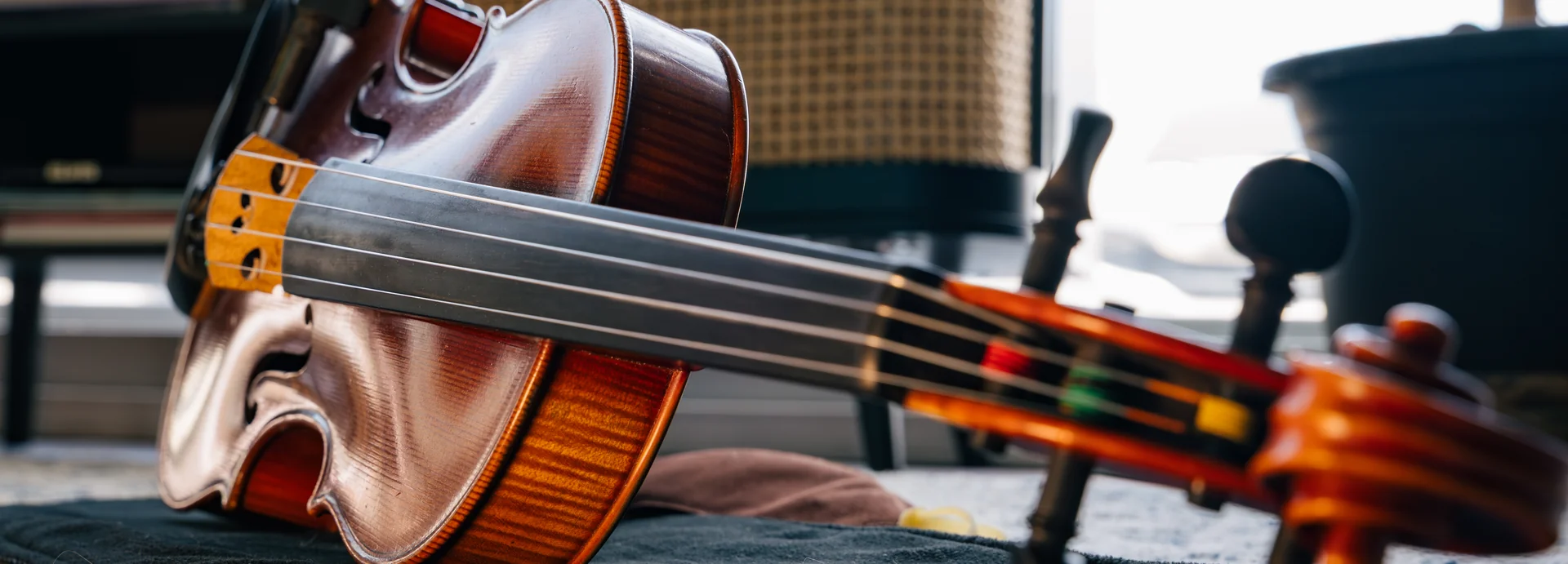
A violin has no frets, no keys, no markings. Every note is found by the hand, guided by the ear. Most of what learning the instrument actually means is the slow joining of those two until they move as one thing.

On violin, every note is a decision.

Every pitch and every shade of tone is shaped by the player in the moment. Tuning, intonation, vibrato, articulation are all the same skill in different forms, and the work of learning is mostly the slow refinement of that skill.

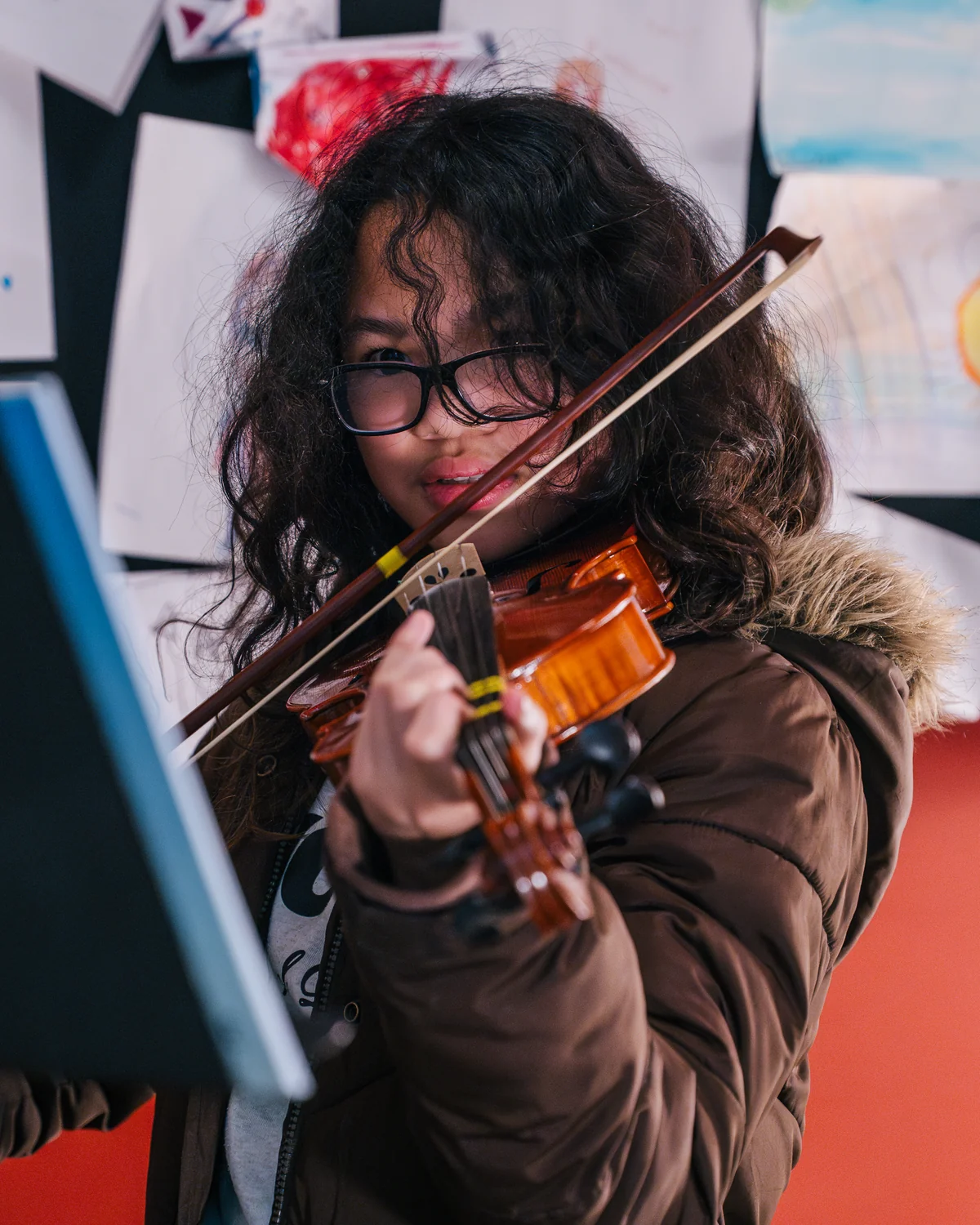
Young violin student in a Resonate lesson room in Edmonton

How violin learning tends to unfold here

Most of what makes a violin sound like itself happens in the meeting between the hand, the ear, and the bow.

01

The bow is where the violin actually speaks

Tone, dynamics, articulation, phrasing. Almost everything that makes a violin sound expressive comes from the right hand. Lessons spend real time on bow weight, bow speed, contact point, and the small adjustments that turn a note into a phrase. It is the quietest and most consequential side of playing.

02

Intonation is ear training before it is anything else

Finding pitches is not a mechanical skill. It is the ear teaching the hand where to land. Lessons work on this slowly and patiently because there is no shortcut. Over time, what felt like guessing starts to feel like knowing.

03

Same instrument, different vocabularies

Classical violin and fiddle music sit on the same foundation. Tone production, intonation, time. Once a player can hold a tone, find a pitch, and move a bow with intent, the music they choose to play is open. Lessons here can lean classical, lean fiddle, or move between them depending on what the student wants to learn next.

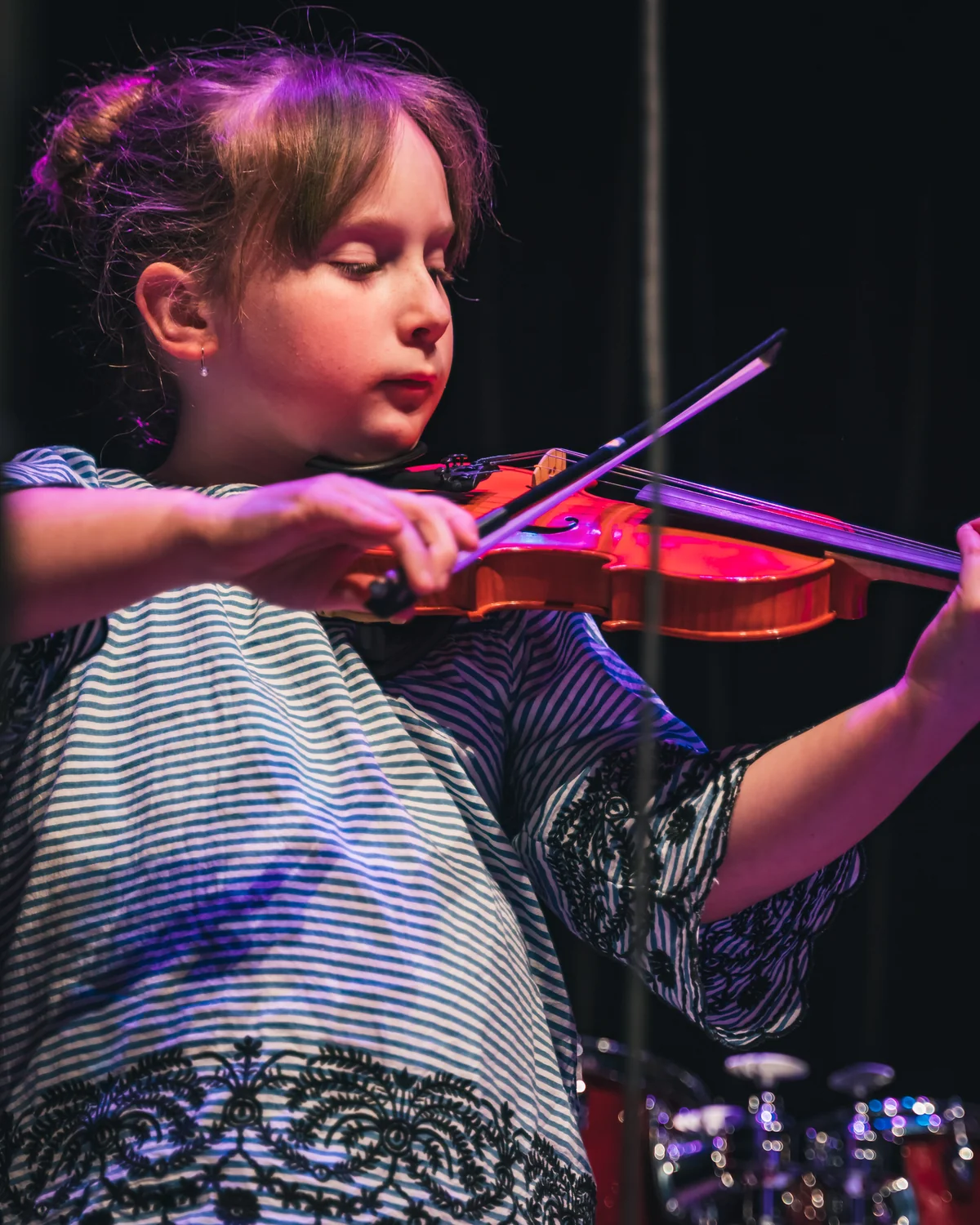
Young Resonate violin student performing on stage at a recital in Edmonton

A good fit often looks like this.

Violin tends to fit people who want to take the long view of an instrument. The early months ask for patience and attention from the body, and the rewards compound over time rather than landing all at once. Players who enjoy that kind of slow, layered progress tend to fall in love with it.

That might be a child starting young, an adult returning to an instrument they put down years ago, or someone picking up violin or fiddle for the first time because they finally have time. Some students come for classical training, some come for fiddle traditions, and some come without knowing yet. Lessons here meet each of them where they are.

Practical lesson options

Private violin and fiddle lessons are available through weekly membership or as drop-ins.

30 minute private lesson

Often a strong fit for younger beginners, or for people who want a consistent weekly starting point.

60 minute private lesson

A better fit for older students, adults, returning players, or anyone who benefits from more room to settle in and work through ideas.

Weekly membership

The primary lesson structure at Resonate. It includes a reserved weekly lesson time, make-up lesson flexibility, and one complimentary recording studio hour every three months.

Drop-ins

A flexible option for students who do not want a fixed weekly time. These are single lessons booked individually based on teacher and schedule availability.

Pricing snapshot

01
30 minute lesson – drop-in
$40
02
30 minute lesson – weekly membership Lessons on Mondays are $135/mo to account for long weekends
$145/mo
03
60 minute lesson – drop-in
$75
04
60 minute lesson – weekly membership Lessons on Mondays are $265/mo to account for long weekends
$285/mo

Weekly membership includes make-up flexibility with at least one week's notice and one complimentary recording studio hour every three months.

Lessons here are taught by a championship fiddler.

Colten Bear teaches fiddle, violin, mandolin, banjo, and guitar at Resonate. He's a Métis fiddler who came up through Métis and bluegrass traditions, and studied with Daniel Gervais at Victoria School of the Arts. His fiddle work has won him both the Grand North American and Canadian Grand Masters Fiddle Championships, and put him on stage and on recordings alongside players like Natalie McMaster and Calvin Vollrath. He also writes and records with the Edmonton band Monks on Call.

Students who come in leaning fiddle find someone deep in the tradition. Students who come in for violin or starting from scratch find a teacher whose patience with intonation, bow control, and the slow work of listening comes from years of doing it himself.

Click the portrait to hear more about how Colten teaches.

Starting is simple

Tell us a little about who lessons are for and what you have in mind.
You do not need everything figured out first.

Start Here