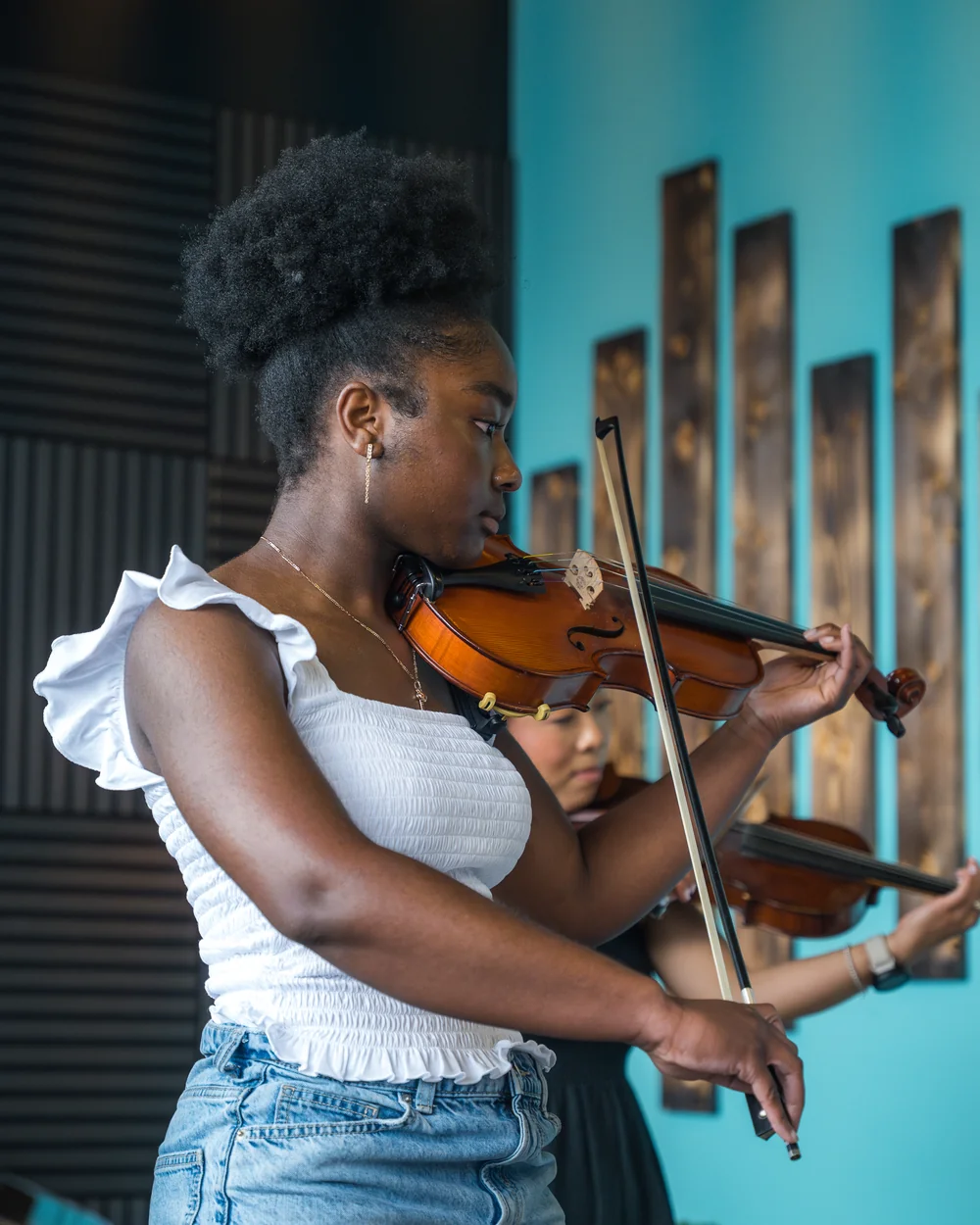
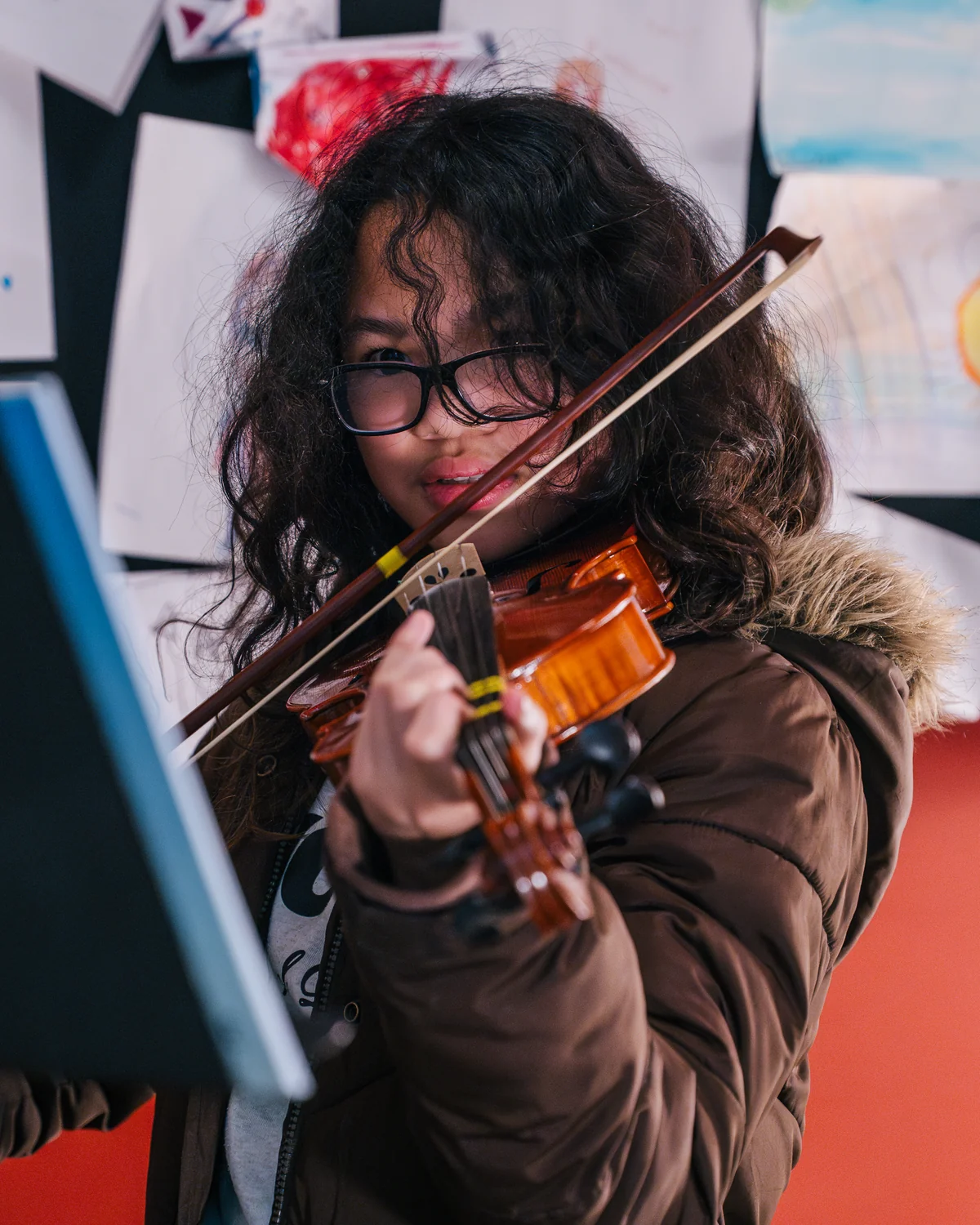
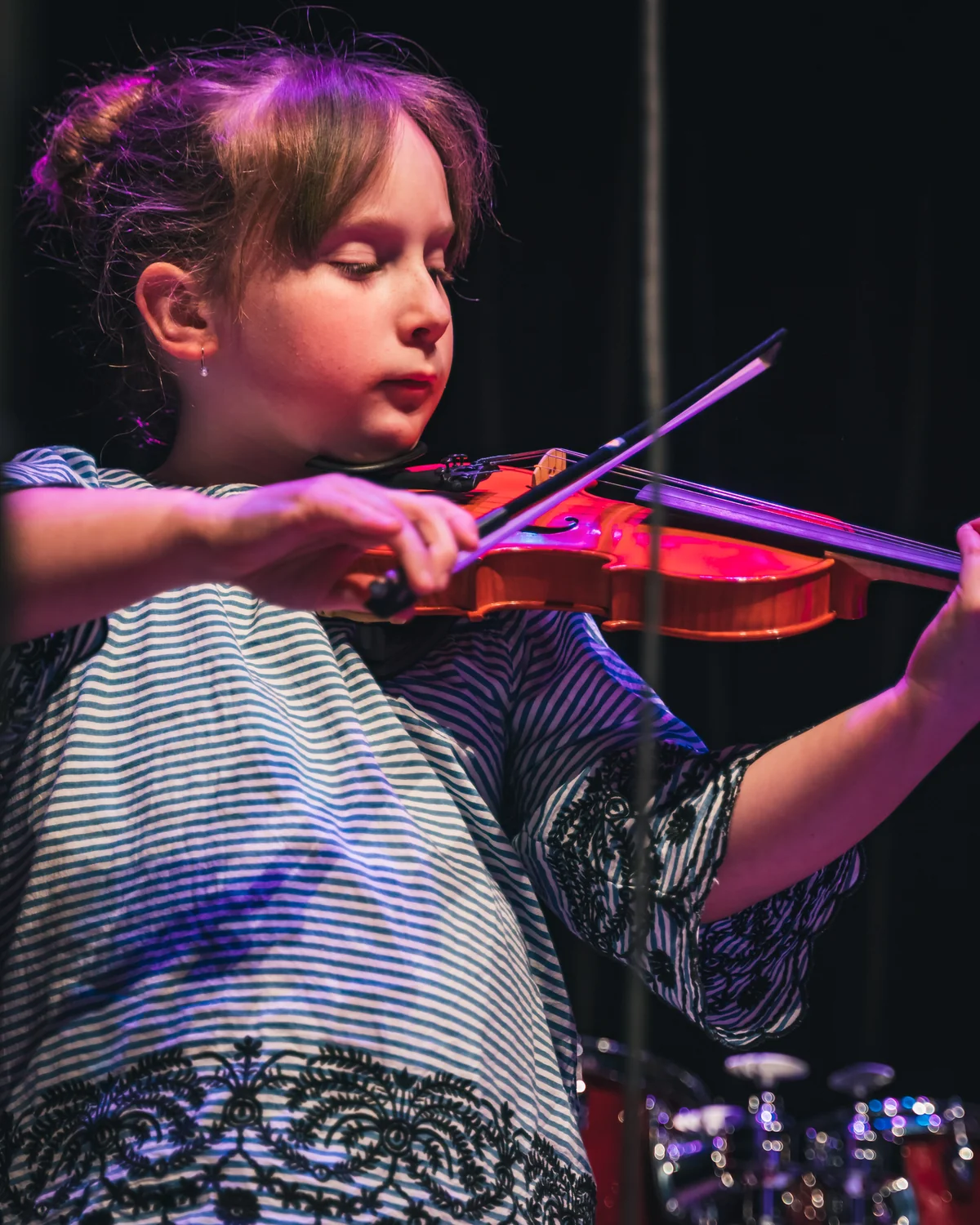
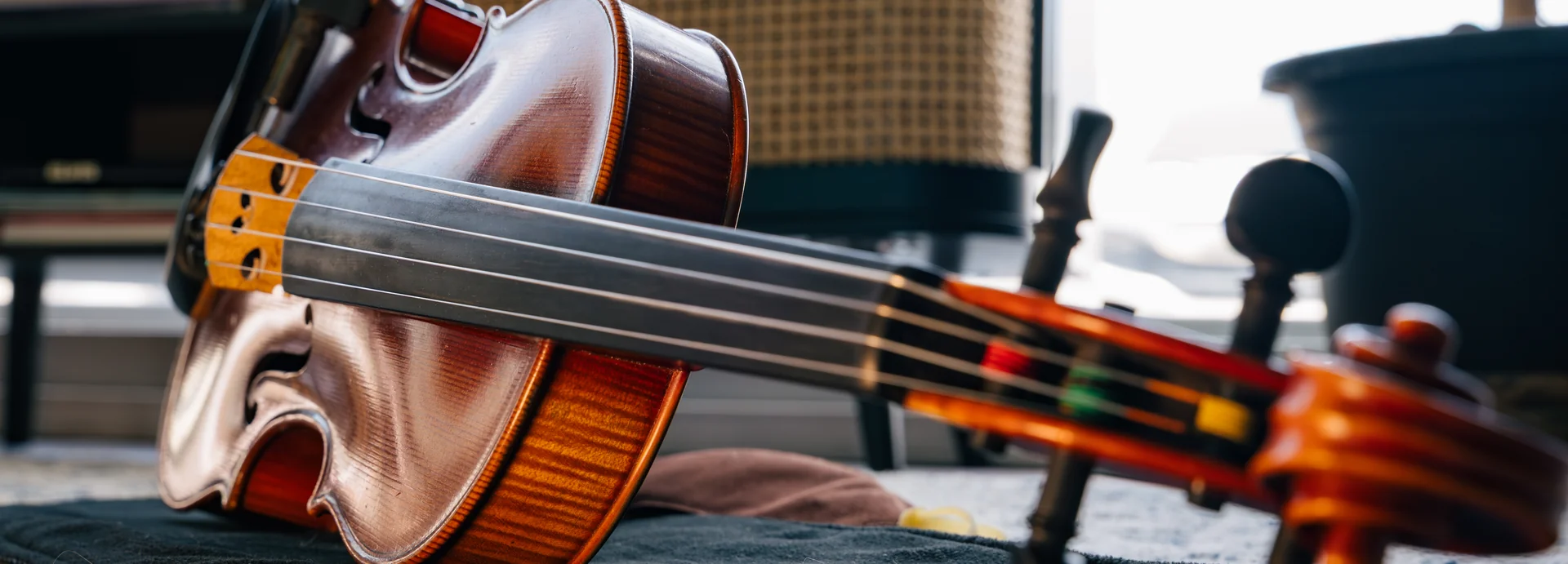
Same instrument, different traditions. A violin and a fiddle are physically
identical: same body, same strings, same bow. What changes is the music, the
technique, and often the player’s identity. “Violin” tends to
imply classical, orchestral, or recital-hall contexts. “Fiddle”
implies folk, Celtic, old-time, country, bluegrass, or Métis traditions:
music for dancing, jamming, and community.
The technique differs in real ways. Fiddle styles use more rhythmic bowing,
double-stops (playing two strings at once for harmony), drones, and ornaments
specific to the tradition. Classical violin uses more vibrato, longer bow strokes,
and a different relationship to dynamics. Many players move between both, and a
teacher who plays in both traditions can show you where they overlap and where
they differ.
For students in the Edmonton area, the Métis fiddle tradition is a
particularly rich one to study: distinct rhythms, distinct ornaments, deep
cultural roots, and an active community of players.