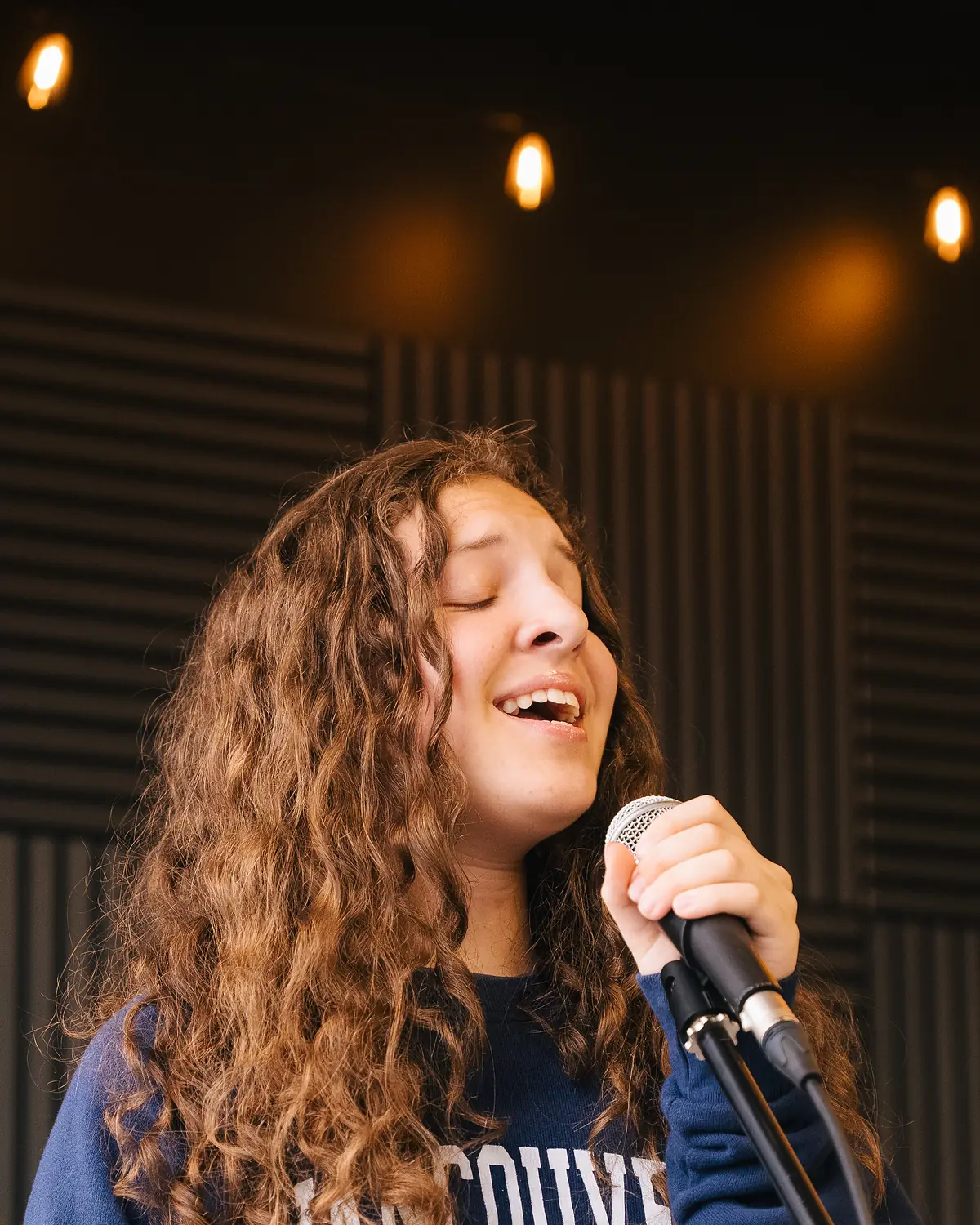
Young singer at the microphone during a vocal performance at Resonate in Edmonton

Voice Lessons

Voice is the one instrument you already have.

Most people have been using it long before they ever think about a lesson. Singing along in the car, humming in the kitchen, carrying a melody without meaning to. For some, voice becomes the primary way they make music. For others, it is where songwriting, performing, or being in a band opens up.

The body is the instrument.

Breath, posture, muscle, and attention all shape the sound. Voice develops a sense of pitch, listening, timing, and expression through direct physical experience. It builds comfort with using your own sound in the presence of other people.

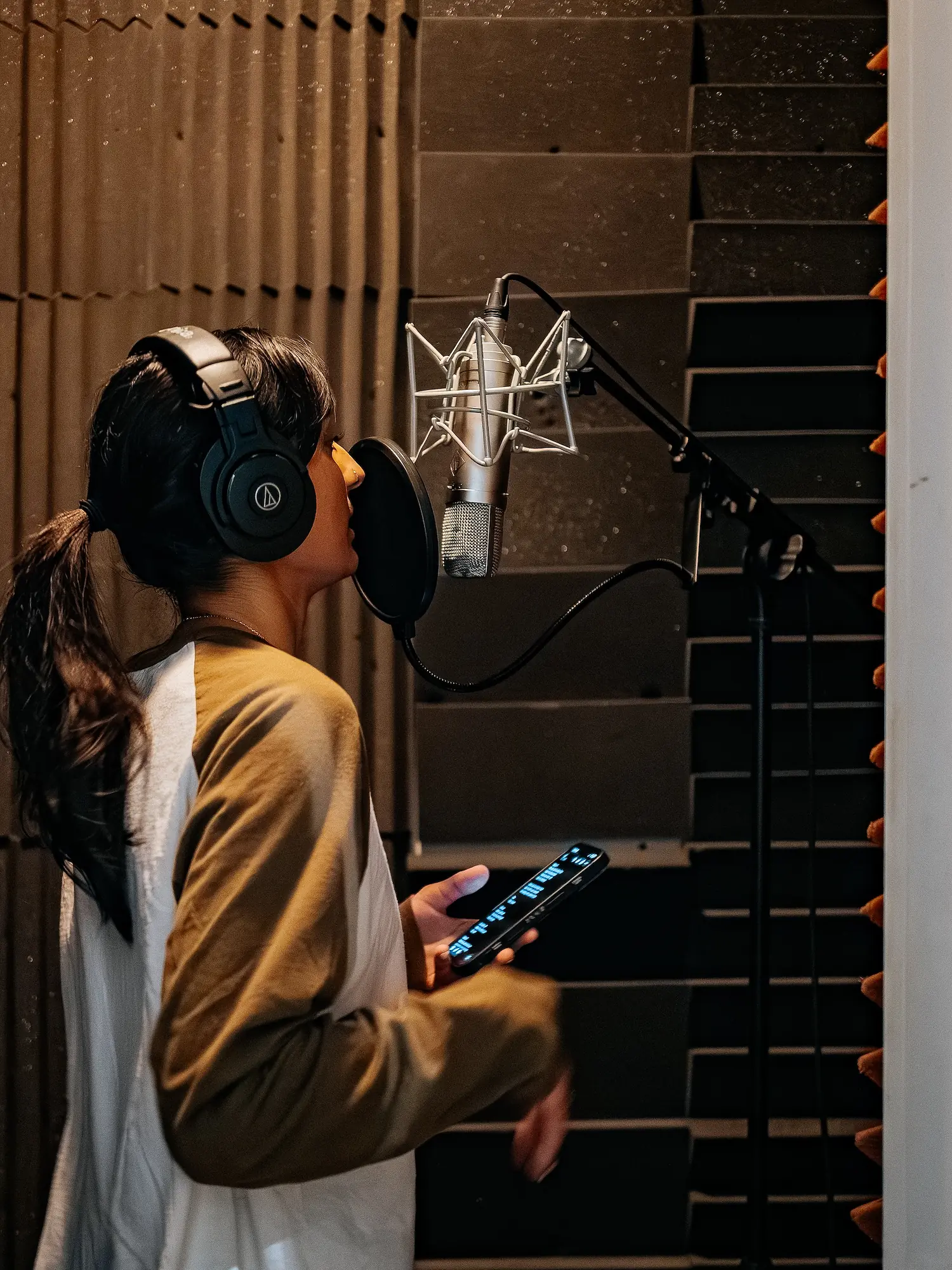
Vocalist recording in the Resonate vocal booth with headphones and large-diaphragm microphone

How voice learning tends to unfold here

What changes in voice lessons is usually less about the voice itself and more about what's in the way of it.

01

Start with the voice already there

Most voice students arrive already using their voice. Singing along to things, humming, speaking publicly, writing lyrics on their own. Lessons work better when that is the starting material, not something to move past before real work begins.

02

Breath, body, and sound are all part of the lesson

A voice lesson includes breath work, posture and movement, warm-ups that can sound strange out of context, and real time spent on how the body is carrying sound. The body is the instrument, so the lesson works with the body as much as with songs.

03

Voice lands at the front of a lot of what happens here

Voice usually sits at the front of performance, songwriting, recording, and playing with other people. More voice students end up in those situations than students of any other instrument. They come up naturally at Resonate: recitals, sessions in the recording studio, songs being written, the monthly After Hours Jam.

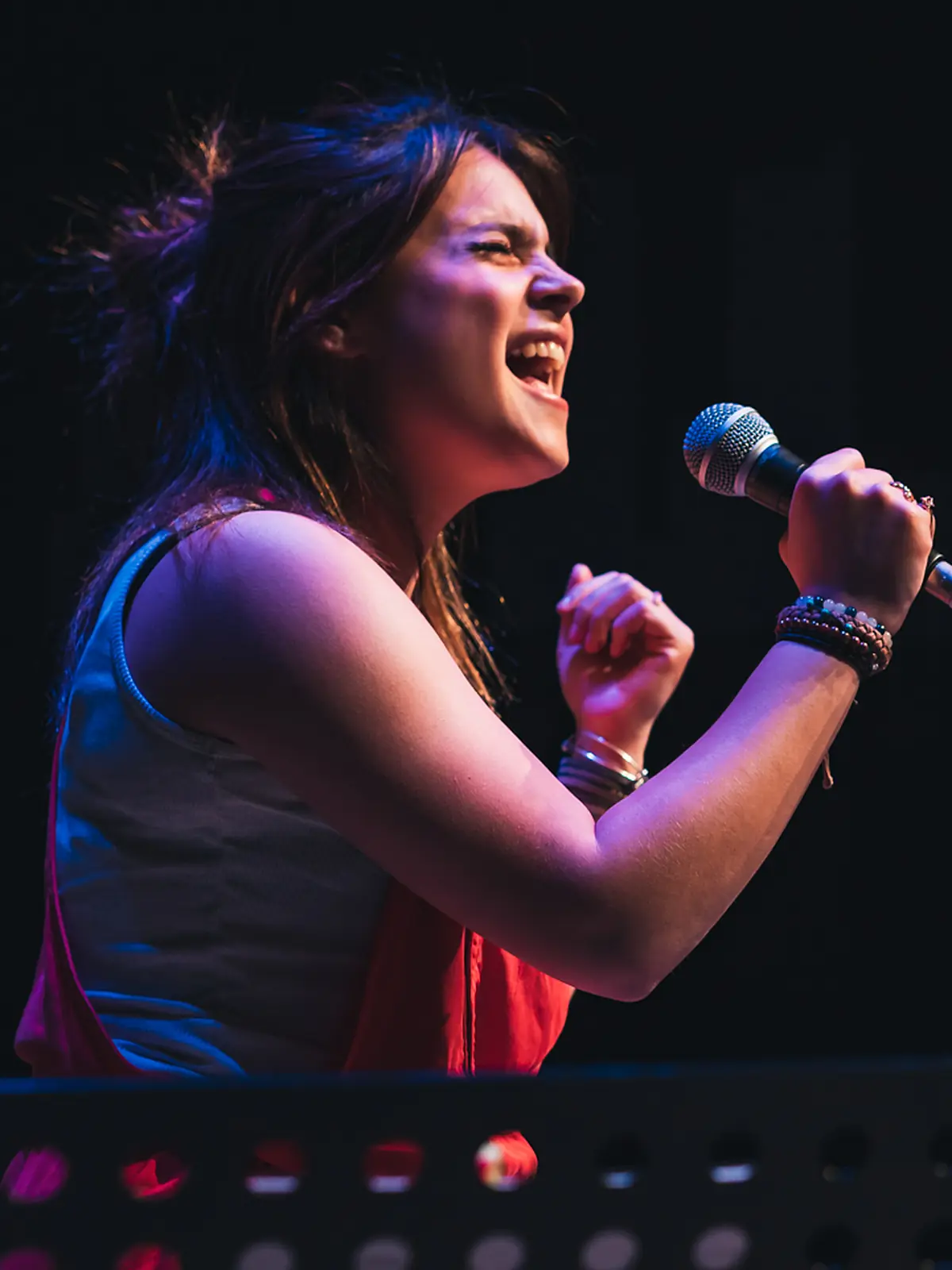
Vocalist performing at the front of a band on the Resonate stage in Edmonton

A good fit often looks like this.

Voice tends to work especially well for people drawn to singing the music they love, or for people who want to be at the front of the music they make.

That might mean starting with a few songs in mind, returning after a long time away, returning after being told to stop, working toward a band or a solo project, writing your own songs, or wanting a steadier and more present voice in general, including adults who take lessons to carry themselves better in public speaking.

Practical lesson options

Private voice lessons are available through weekly membership or as drop-ins.

30 minute private lesson

Often a strong fit for younger beginners, or for people who want a consistent weekly starting point.

60 minute private lesson

A better fit for older students, adults, returning singers, or anyone who benefits from more room to settle in and work through ideas.

Weekly membership

The primary lesson structure at Resonate. It includes a reserved weekly lesson time, make-up lesson flexibility, and one complimentary recording studio hour every three months.

Drop-ins

A flexible option for students who do not want a fixed weekly time. These are single lessons booked individually based on teacher and schedule availability.

Pricing snapshot

01
30 minute lesson – drop-in
$40
02
30 minute lesson – weekly membership Lessons on Mondays are $135/mo to account for long weekends
$145/mo
03
60 minute lesson – drop-in
$75
04
60 minute lesson – weekly membership Lessons on Mondays are $265/mo to account for long weekends
$285/mo

Weekly membership includes make-up flexibility with at least one week's notice and one complimentary recording studio hour every three months.

Lessons here are shaped by real teachers.

Voice teachers at Resonate are working artists whose own lives are spent at the front of bands, at the front of songs, and at the front of their own performances. That matters with voice, because voice sits close to the person singing. The teacher has stood in the place the student is learning to stand.

In a one-to-one lesson, guidance adjusts to the person. A teacher can notice what the voice is doing on a particular day, where the body is holding tension, and how to shape the next step around the actual student in the room. That kind of attention is particularly useful with voice, where the instrument cannot be separated from the person using it.

Click a portrait to hear more about how they teach.

Starting is simple

Tell us a little about who lessons are for and what you have in mind.
You do not need everything figured out first.

Start Here

Going deeper

If you'd like more before reaching out: common questions, the styles you can study, and what tends to develop in your first months and first year. Each section below is collapsed by default. Tap any heading to read more.

Common voice questions

Real beginner questions. Tap any to read the full answer.

I’ve been told I can’t sing. Will voice lessons actually help?

Almost always, yes. Most adults who think they can’t sing either took someone’s casual comment as a verdict years ago, or they’re hearing themselves through self-consciousness that’s stricter than the actual voice. True tone deafness (the inability to hear the difference between pitches) is rare. The far more common situation is an untrained voice that hasn’t been given the time, breath, or attention to find what’s there.

What changes in voice lessons is rarely the underlying ability. It’s the confidence, the breath, the posture, and the willingness to make sound in front of another person. Most students are surprised how much voice is in them once those things settle.

Will singing properly help protect my voice?

Yes. A lot of vocal strain comes from singing without breath support, from forcing notes that aren’t placed well, or from a habitual posture that’s working against the sound. Proper technique reduces all of that. Singers who’ve trained their voice tend to sing longer, recover faster, and avoid the chronic hoarseness that comes from years of pushing.

The most common voice issues we see are temporary and recoverable: not enough water, too little sleep, talking too much when you’re sick, or pushing through a hoarse day instead of resting. Most of that is preventable with awareness, which is one of the things lessons build. If you’re ever concerned about persistent hoarseness or vocal change, an ENT specialist is the right call, but for almost everyone, lessons are protective rather than risky.

Do I need to be able to read music?

No. Most contemporary voice work is done by ear, by chord chart, or by following the song as recorded. Reading sheet music is useful if you head toward classical, musical theatre, or choral work, but it’s something to add when you need it rather than a prerequisite. Many singers have meaningful careers without ever learning to read notation.

What’s a good age for kids and teens to start voice lessons?

Younger voices respond well to gentle work. Most kids start private voice lessons around age 7 or 8, though some are ready a bit earlier. The bigger consideration with voice is the voice change in early adolescence (more visible in boys, but real in girls too). Teachers know how to work with a changing voice without straining it. The voice is still developing, and that’s part of the lesson during those years.

For kids under 6 who love singing but aren’t quite ready for a private lesson, our Tunes & Tots program (ages 2 to 3) and Junior Jammers (ages 4 to 5) build pitch, rhythm, and musical confidence in a group setting.

Adults often ask whether they’re starting too late. They aren’t. Voice lessons may be especially valuable for adults: more attention span, a clearer sense of what music actually moves you, and (once the initial self-consciousness softens) a willingness to put time into something that matters.

Are online voice lessons effective?

In person is generally the better experience, regardless of age. Voice is more sensitive to audio quality than most instruments, and the small physical adjustments teachers make (posture, jaw, breath placement) are easier to address in the same space.

We keep online lessons available because they genuinely serve students who can’t make it in regularly. That includes students who live out of town and come in occasionally for in-person lessons, recitals, or recording sessions. It also covers the weeks when transportation, weather, or feeling a bit under the weather means an in-person make-up isn’t practical.

Plenty of students use a mix of both formats. The quality difference is real, and we noticed it directly during the COVID period when everything was online. That’s part of why we treat online as a complement to in person rather than a substitute.

How long until I sound noticeably better?

How quickly varies between students, and practice between lessons is the biggest factor. For an engaged student warming up most days and working on a song, noticeable improvement in control, range, and breath usually shows up within the first month or two. The voice itself doesn’t change dramatically that fast, but how you use it can.

What “sounding better” means also varies. Hitting pitches more reliably is one threshold. Singing through a song without running out of breath is another. Sounding like yourself rather than like you’re trying to sound like someone else is a third and tends to come a bit later. Most students cross the first thresholds in their first month or two of consistent practice.

Styles you can study at Resonate

Voice lessons here can move across a wide range of musical territory. Tap any style to read more.

Contemporary pop and indie

Most voice students come in wanting to sing songs they already love from contemporary artists. Lessons build around the music that pulled you toward singing in the first place: phrasing, breath control through long lines, navigating range jumps, and working with the actual recordings as reference. By far the most common starting point at Resonate.

Musical theatre

A full discipline of its own: belting and mix voice, storytelling through song, navigating the legit-to-belt spectrum, working from sheet music, and the kind of vocal stamina the stage actually demands. For students aiming at musical theatre programs, school productions, auditions, or anyone who simply loves the repertoire.

Classical and art song

The deepest tradition for trained voice. Italian and German art song, English oratorio, opera arias. Builds breath capacity, vocal placement, language work, and the kind of technique that supports a voice across decades. Useful as a primary path for students with classical interest, and as a foundation layer for any singer wanting more capacity and longevity.

R&B, soul, and gospel

A rich tradition in its own right: vocal runs, riffing within a melody, deep emotional commitment, and a relationship to groove that’s different from other styles. Often paired with active listening and transcription work, since so much of the language is learned from the great singers in the tradition.

Songwriting with voice

For students writing their own songs or wanting to. Finding melodies that suit your voice, lyrics that sit naturally on phrases, and the practice of arranging your own ideas as both writer and singer. Often paired with guitar or piano in lessons, since most singer-songwriters self-accompany.

Country, folk, and Americana

Storytelling through song. A close relationship to the lyric, breath placement that supports a conversational delivery, harmonies for the students who want them, and the kind of phrasing that lives between speech and singing. A natural fit for songwriters and for students drawn to the great voices in the tradition.

What to expect in your first months and first year

Rough averages. Pace varies based on age, practice consistency, and any prior musical experience.

Your first lesson

Most first lessons cover breath (where you’re breathing from, how much you have), posture (how the body is sitting under the sound), finding your comfortable range, and starting work on a song you arrive with or a song the teacher picks with you. Some warm-ups that may sound strange out of context. A bit of take-home practice, usually some breath exercises and time with a song. The visible progress varies; what’s actually beginning is the relationship between your body and the sound it’s making.

Your first month

With consistent practice, which is the single biggest variable in how quickly anyone progresses, most beginners are working through their first song with growing comfort by the end of the first month. Breath stays under longer phrases more reliably. Pitch starts to settle. Some old habits (the cracked notes you used to push through, the strain you didn’t know was strain) start to soften. What’s developing in this period is awareness more than range. The visible progress can feel slow even when the underlying foundation is building.

Your first three months

By around three months, most students have a song or two they can sing through with confidence, growing comfort across more of their range, and the beginnings of a real warm-up routine they actually do at home. The voice itself starts to sound more present. For some students this is the turning point where singing starts to feel like something they do rather than something they wish they could do. Weekly membership students reach their first complimentary recording studio session around this point, which can become a low-pressure way to capture something they’ve been working on.

Your first year

The difference between students widens here. Those who practice regularly typically have a meaningful repertoire of songs they enjoy singing, a noticeably expanded range, more reliable pitch, and the growing comfort to sing in front of other people without disappearing inside themselves. Less consistent students may still be building basic comfort, and that’s fine too. Through the year, opportunities to perform in Resonate recitals and to use the included recording studio sessions come up several times for students who want to take them. Many voice students end up in those situations earlier than students of other instruments because voice sits at the front of so much of what happens here. The honest answer to “where will I be after a year” is that practice frequency between lessons matters more than almost any other factor.

Beyond the first year

Voice is a lifelong instrument. The teachers here have been singing for decades and still find new things in their own voices. The first year is about getting the foundational pieces down: breath, posture, listening to yourself honestly, comfort across your range, the rhythm of warming up before you sing. What comes after is leveling up what you can do with those foundations: the songs you can take on, the songs you can write, the bands you can front, the recording sessions you can carry, the rooms you can fill.

Some students build deep repertoire across a single tradition. Some shift into songwriting or recording. Some join bands. Some pursue musical theatre or classical seriously. Some teach. Many do some combination of these over time.

Most students who stay with voice stay in lessons for years, because the voice itself keeps developing and so does the relationship between the person and their sound. The road forks based on what lights you up, and a good teacher helps you notice which fork is calling.